When a tree falls, whether intentionally or due to a storm, a decision has to be made. You can uproot the trunk, prune the branches, and remove the debris. But there’s still that tricky part: the stump. And you know what? It’s an insidious thing that’s easy to overlook. “It’s not that big,” you might tell yourself. “It could decompose over time.” But the thing is, ignoring it can cause more damage than you think. That’s where shredding stumps becomes more than just a simple gardening task—it’s also a step toward a healthier, cleaner, and safer lawn.
THE PROBLEM WITH LEAVING A STUMP
A rotting stump isn’t just an eyesore. Sure, at first, it might seem harmless, especially if it’s a small stump or tucked away in a corner. But decay attracts unwanted guests. We’re talking termites, carpenter ants, fungi; Things that, frankly, aren’t good for the local ecosystem or your home.
And then there’s the way it ruins the aesthetics of your yard. Unsightly tree stumps not only look bad, but they also limit the use of your lawn. Want to mow it easily? Forget it. Thinking about planting a new tree? That stump is taking up space. Having a garden party? There’s the tripping hazard.
UNDERSTANDING THE DECISION TO REMOVE THE STUMP
Some homeowners are torn between stump removal and stump mulching. While the terms sound similar, the methods differ greatly.
Complete stump removal is exactly what it sounds like: pulling the entire stump off the tree, roots and all. It’s an intensive process. It tears up the soil, leaves a large hole, and works best with heavy machinery—and for good reason.
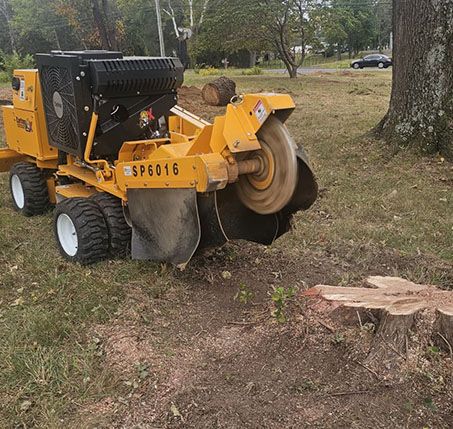
Stump mulching, on the other hand, is more refined. A stump shredder grinds the stump below ground level, leaving behind wood chips similar to mulch. It doesn’t uproot the tree, but it does prevent regrowth and removes the visible stump without causing significant damage to your garden.
So, which is better? It depends. But for most gardens, stump shredding services offer the perfect balance of efficiency, cost, and minimal disruption.
WHY IT’S GOOD TO GRINDING TREE STUMPS
Let’s go back to basics. What makes a healthy lawn? Good soil, enough light, space for roots and water to circulate freely, and room for tree or grass growth, if you prefer. A leftover stump interferes with all of that.
Even after the tree is cut down, the root system remains active for a while. In some tree species, the root system may even try to sprout again. You’ve probably seen those pesky sprouts appear long after you thought you’d removed the stump. It’s not just an aesthetic detail. These suckers absorb nutrients and water from the other plants.
Mulching stops that regrowth. It stops the old tree’s growth cycle. And that, in turn, allows the rest of the lawn to breathe.
THE PROBLEM WITH LETTING NATURE TAKE ITS COURSE
You might be thinking, “I’ll just let it rot. It’ll decompose eventually.” Sure. Maybe. But it could take 10 years. Sometimes longer. In the meantime, that rotting stump continues to harbor pests, attract mold, and, depending on the species, might try to sprout again. Not to mention, it becomes an odd focal point for your garden, especially if it’s in the middle of the lawn or flowerbed.
And what about those wood chips that naturally fall off as it decomposes? They don’t spread evenly. They accumulate, alter the soil’s pH, and prevent water from reaching where it’s needed.
USING THE RIGHT EQUIPMENT: THE POWER OF A STUMP SHREDDER
A stump shredder may seem modest compared to other machines, but it’s surprisingly effective. With rotating blades, it quickly shreds the wood, pulverizing the stump into pieces that can be reused or removed.
Some professional services even offer cleanup or replanting as part of the package, so you’re not left with a crater or an unsightly pile of mulch. It’s a smarter strategy, especially if the stump is near trees whose roots you don’t want disturbed.
You may have read about DIY methods: drilling holes, applying a chemical herbicide to stumps, waiting months… It’s slow, unreliable, and potentially harmful to the environment. For greater efficiency and safety, it’s best to call someone trained and equipped with the necessary tools who knows exactly how to handle the entire stump without risking damage to the surrounding areas. Contact us; our team will be happy to help.