Homeowners constantly call us asking, “Can you come and top my tree?” It sounds simple: just trim the top so it’s not too tall or messy. But here’s the honest answer you’ll always get:
Should I top my tree? No.
Topping a tree is one of the most damaging things you can do to it. Proper pruning gives you the desired results (more light, better clearance, less risk) without your tree slowly deteriorating. This post explains why pruning instead of topping is the better choice for your trees, your property, and your wallet.
If you’d like to delve deeper into the long-term damage topping causes, you can also read our previous blog post.
What Is Tree Topping (And Why Do People Request It)?
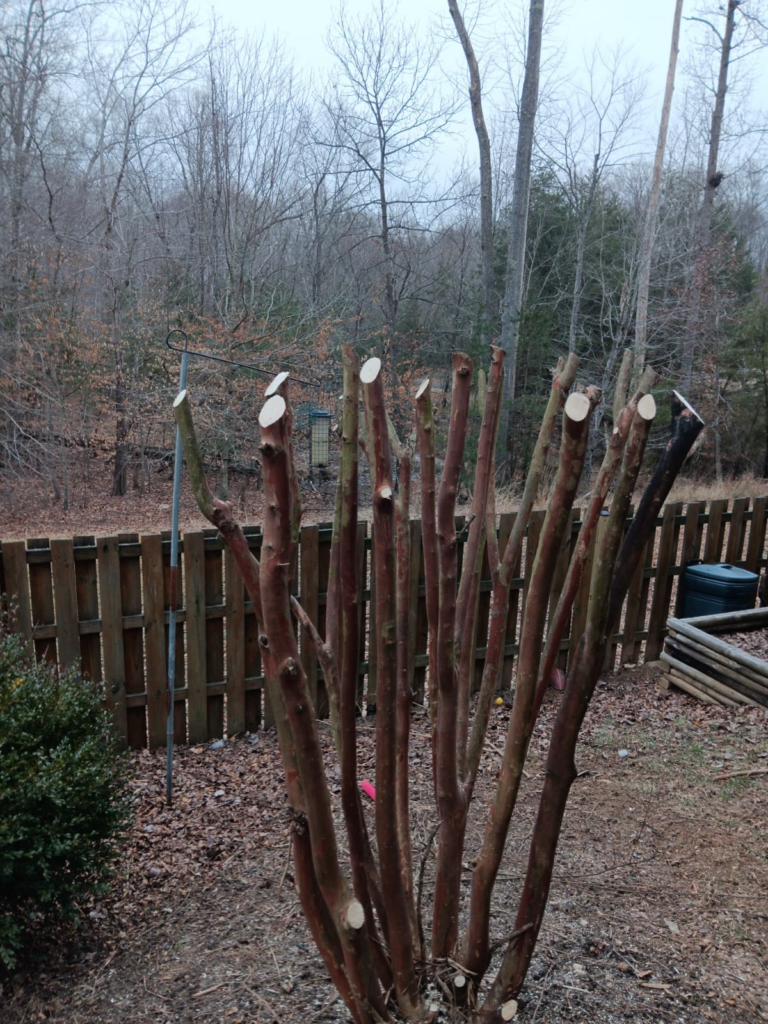
Tree pruning involves cutting back large branches or the entire crown of a tree, leaving only stumps, usually to make it shorter or less intimidating. It is also known as topping or pruning.
Common reasons for asking about tree pruning:
“It’s grown too big, and I’m worried it will fall during a storm.”
“It blocks my view or doesn’t get enough sunlight.”
“Things keep falling on my roof, deck, or driveway.”
“A neighbor or another company told me pruning was the best solution.”
We understand these concerns because they are valid. The problem is that pruning doesn’t solve them. In many cases, it worsens the situation in the coming years.
Should I prune my tree? (Short answer: No)
That’s why we answer “no” whenever someone asks if we can prune a tree:
Pruning stresses the tree. Removing most of the leafy canopy eliminates the tree’s ability to produce food, forcing it to struggle to survive.
Topping creates weak, fast-growing shoots. These “water sprouts” that emerge after topping are poorly attached and more likely to break during storms.
Topping encourages decay and disease. Large, flat cuts and stumps don’t close properly, making it easier for decay and insects to enter.
Topping often increases long-term risk. A topped tree usually becomes more dangerous over time, not less.
Topping ruins the natural structure. Once topped, a tree never regains its natural shape.
WHAT TO DO. Contact us, and we’ll be happy to help.